
How to Find Delaware County Court Dockets
Docket sheets live on two systems. The Pennsylvania UJS Web Portal holds statewide docket sheets for the Court of Common Pleas and the Magisterial District Courts. Delaware County Public Access holds local court data. For an official docket sheet, the UJS portal is usually the cleanest source. Pick the court that heard the case, then search by docket number or name.
Have the case number ready if you can. It points you straight to one docket and skips the guesswork that name searches bring.
- Open the UJS portal and choose docket sheets for Common Pleas or for the Magisterial District Judge.
- Select Delaware as the county.
- Enter the docket number, or search by last name and first name.
- Add a date range if a common name returns too many cases.
- Open the docket sheet and read the entries from the first filing down to the latest order.
The UJS portal is the front door to dockets, calendars, and payment links statewide.
The Pennsylvania UJS Web Portal hosts docket sheets, court calendars, and PAePay in one place.
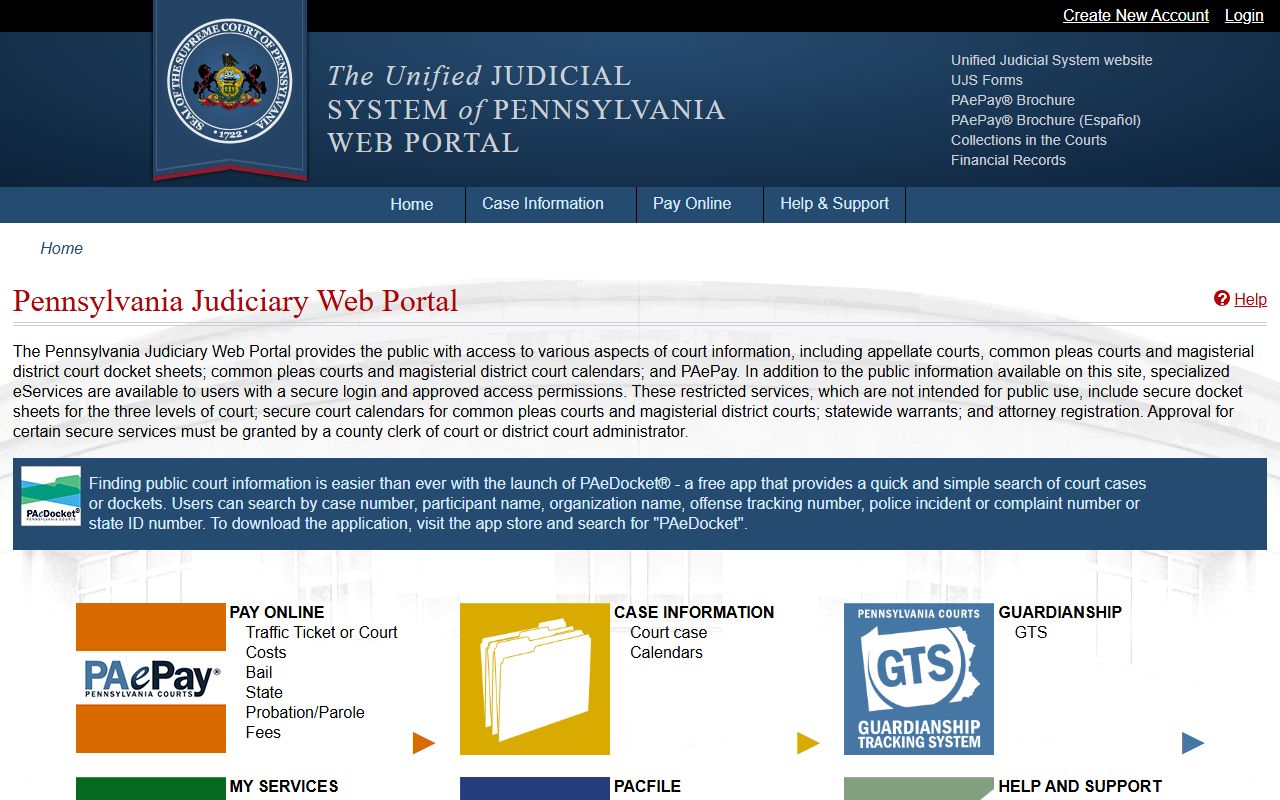
From this portal you reach separate docket tools for Common Pleas and Magisterial District cases.
What a Delaware County Court Docket Shows
A docket sheet packs a lot into a tidy format. The top identifies the case and the court. The middle names the parties and the judge. The body lists docket entries in date order, and the bottom often carries financial data. The table below shows the fields you find on a typical Delaware County docket entry inventory.
| Field | What It Shows |
|---|---|
| Docket Number | Case ID and court; the county code 23 appears in many criminal numbers. |
| Caption | Commonwealth versus defendant, or plaintiff versus defendant. |
| Case Status | Active, closed, disposed, or appealed. |
| Judge | Assigned judge or magisterial district judge. |
| Docket Entries | Complaint, motions, orders, continuances, hearing notices, sentencing. |
| Hearing Dates | Date, time, and the court office for each event. |
| Financials | Fines, costs, restitution, bail, and balance owed. |
| Documents | Docket sheet is public; underlying files may need a clerk request. |
Each entry is dated, so the docket reads like a timeline. The newest event sits at the bottom on most sheets.
Criminal and civil dockets share this layout but stress different fields. A criminal sheet leans on charges, grades, pleas, and sentence data, plus bail and restitution. A civil sheet leans on the claim, the judgment, and any liens. A family sheet may show a divorce or support action while keeping many of its documents off the public view. Knowing which fields matter for your case type saves time when a docket runs long.
Delaware County and Statewide Docket Sources
Delaware County dockets show up in two places, and the two are not identical. The statewide UJS portal is the official source for docket sheets. The county's own Public Access portal can show local civil data that does not always appear in full on the state sheets. For a complete picture, check both.
| Feature | UJS Web Portal | Delaware County Public Access |
|---|---|---|
| Run by | Pennsylvania Unified Judicial System | Delaware County |
| Best for | Official Common Pleas and MDJ docket sheets | Local civil case access |
| Cost | Free to search | Free to search |
| Browser | Standard web pages | JavaScript app required |
The county portal exposes an anonymous permissions endpoint that shows what a public user may view.
The Delaware County Public Access permissions endpoint lists the components a guest user can read.
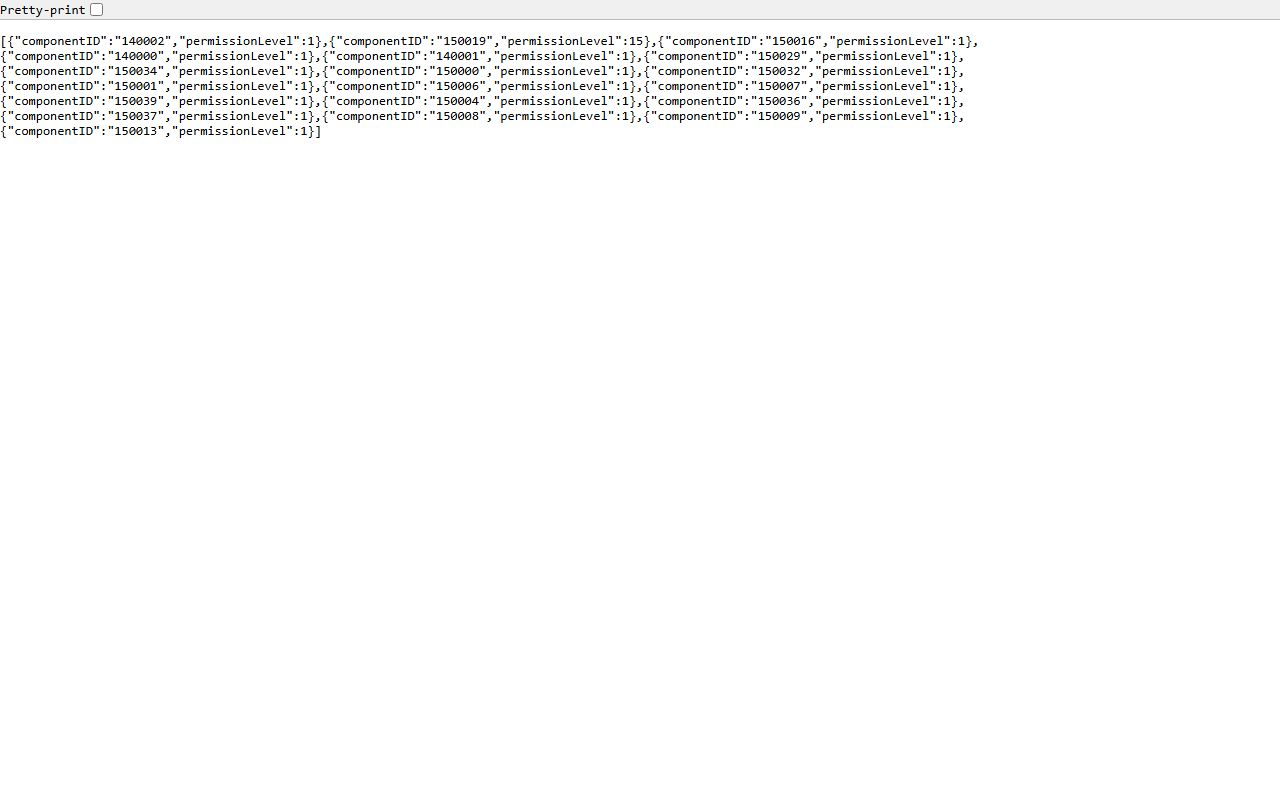
That technical detail is a reminder that the county portal is an app, so plan to use its search screens directly in a browser.
Delaware County Case Number Formats
Docket numbers follow a pattern, and the pattern tells you the court. Common Pleas criminal cases read CP-23-CR, then a sequence and the year. The 23 is the Delaware County code. Magisterial District cases use an MJ-32 format, where 32 marks the 32nd Judicial District. Civil and family formats vary by division.
Match the number to the right search tool. A CP number belongs in the Common Pleas docket search. An MJ number belongs in the Magisterial District docket search. Using the wrong tool returns nothing, even when the case is real.
Read the parts of a criminal Common Pleas number in order. CP marks Common Pleas. The 23 marks Delaware County. CR marks a criminal case. The long sequence is the case count, and the last four digits are the filing year. If you only have a citation or an MDJ slip, start with the Magisterial District search and carry the result forward to any Common Pleas case that grew out of it.
Docket Entries in a Delaware County Court Record
Docket entries are the heart of the sheet. Each one marks a filing or a court action. They are short, dated, and sometimes written in shorthand. Reading them in order tells the whole story of a case.
- Complaint or information, the document that starts the case.
- Arraignment and plea entries in criminal cases.
- Motions and the orders that rule on them.
- Continuances that push a hearing to a later date.
- Sentencing, judgment, or settlement entries near the end.
An entry confirms that something was filed. It does not always contain the document itself, which is the key limit of a docket sheet.
Some entries carry shorthand. A criminal docket may list a charge being "held for court," which means a magisterial district judge sent it on to the Court of Common Pleas after a preliminary hearing. A civil docket may show a "praecipe to enter judgment." When the wording is unclear, the date and the entry type still tell you where the case stands.
Hearing Dates and Financial Entries in Delaware County Dockets
Two parts of a docket draw the most questions: when the next court date is, and how much is owed. Hearing entries list the date, the time, and the court office for each event. A criminal docket may show a preliminary hearing at a magisterial district court, then later events at the Court of Common Pleas in Media. Always confirm a hearing date on the docket itself, because dates move when a case is continued.
Financial entries track money tied to the case. They are not the same as a court fee for a copy.
- Fines and court costs set after a conviction or plea.
- Restitution ordered to be paid to a victim.
- Bail amounts and bail status while a case is pending.
- The current balance owed and any payment plan on file.
If you plan to pay a balance, the UJS portal links to PAePay, where many Pennsylvania court financial obligations can be paid online. Not every matter is payable that way, since some still require a court appearance.
Delaware County Dockets Versus Case Documents
People often expect a docket to hold every PDF. It does not. The docket is an index of events. The underlying pleadings and orders may sit with the clerk, may be sealed, or may simply not be posted online. This gap matters most when you need the actual order, not just proof that it exists.
| Question | Docket Sheet | Full Document |
|---|---|---|
| What it is | Index of filings and events | The actual pleading or order |
| Where to get it | UJS portal or county portal | Office of Judicial Support, by request |
| Cost | Free to view | Copy and certification fees apply |
When you need a certified order for another court or agency, request it from the Office of Judicial Support.
Confidential and Juvenile Delaware County Dockets
Not every docket is open. Pennsylvania's Juvenile Act keeps juvenile delinquency and dependency dockets confidential, so the public should not expect a routine juvenile lookup. Sealed, expunged, and limited-access cases also drop out of public docket views. Even on open dockets, the court redacts protected details before posting.
The Juvenile Act sets these confidentiality rules in state law.
You can read 42 Pa.C.S. Chapter 63, the Juvenile Act, which governs juvenile proceedings and their records.
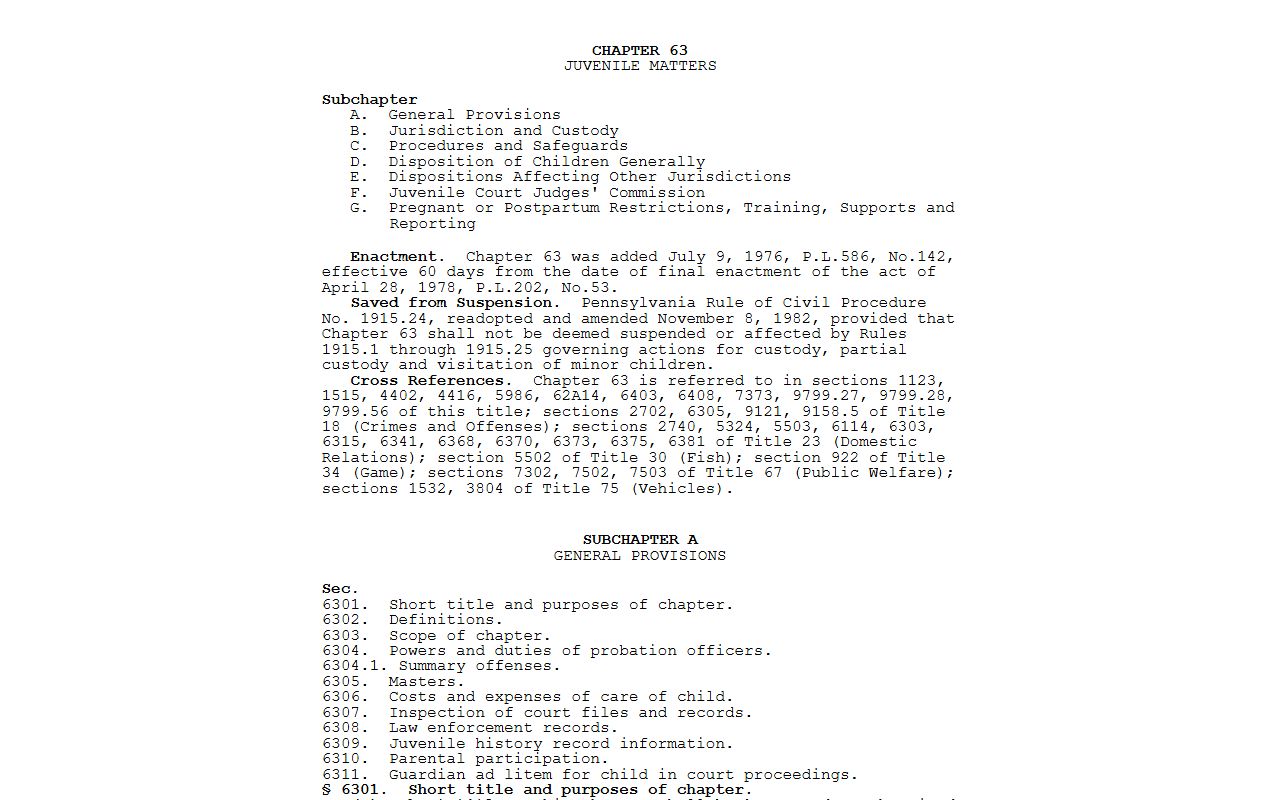
Because of these rules, a missing juvenile docket is often a sign of confidentiality, not a search error.
Note: If a case does not appear on a public docket search, it may be sealed, juvenile, or filed under a number format you have not tried.