
How to Find Delaware County Arrest Records
There is no single public "arrest list" for the county, so you trace an arrest through several official sources. Start with the jail roster for anyone still in custody. Move to the court docket for charges and hearing dates. Use the state criminal history system for a formal record check. Each source shows a different slice of the same arrest.
Gather a full legal name and, if you can, a date of birth. Common names return long lists, and a birth year helps you pick the right person.
- Check the jail roster through Delaware County inmate records for a person still held at the county facility.
- Search the Magisterial District docket for the preliminary arraignment and the first charges.
- Search the Common Pleas docket if the case was held for court.
- Run a Pennsylvania criminal history check for a formal record.
- Confirm the disposition on the docket before you treat any charge as resolved.
Broader criminal court history sits on the Delaware County court records page, which covers full case files and search portals.
Arrest Records Versus Delaware County Court Records
An arrest record and a criminal court record are not the same thing. An arrest record documents the moment police took someone in. A criminal court record tracks the case after charges are filed. The two link together, but they live in different systems and answer different questions.
| Point | Arrest Record | Criminal Court Record |
|---|---|---|
| What it captures | Booking, charges at arrest, custody status | The full case from filing to disposition |
| Where it lives | Jail roster and police booking data | Common Pleas and Magisterial District dockets |
| What it proves | That an arrest happened | How the charges were resolved |
| Where to look | Inmate records and the county prison | Court records and docket search |
For the case outcome, always read the court record. An arrest alone never tells you whether a court found someone guilty.
Booking and the Arrest Process in Delaware County
Booking is the intake step after an arrest. The arresting agency processes the person, checks identity, and screens for medical needs. Many criminal cases then go to a magisterial district judge for a preliminary arraignment, where bail is set. The steps below outline the path most arrests follow in the county.
- Arrest by a police agency or the sheriff.
- Transport to booking or to a preliminary arraignment.
- Identity check, property inventory, and medical screening.
- Photograph and fingerprints as the law requires.
- Preliminary arraignment before a magisterial district judge.
- Bail set as unsecured, monetary, or nonmonetary, or denied where allowed.
- Classification and housing if the person stays in custody.
Bail and pretrial release run through the county court. The Delaware County pretrial bail page explains how bail is handled.
Charges Versus Convictions in Delaware County Records
This is the distinction people miss most. A charge is an accusation. A conviction is a finding of guilt, by plea or by trial. An arrest record may list serious charges that a court later dropped, reduced, or dismissed. Reading only the charge gives a false picture.
| Point | Charge | Conviction |
|---|---|---|
| Meaning | An accusation filed by police or a prosecutor | A guilty plea or guilty verdict |
| When it appears | At arrest and arraignment | After the case is resolved |
| Can it change | Yes; charges are often amended or withdrawn | It is the final outcome on those counts |
| Where to confirm | The arrest record | The disposition field on the court docket |
Always read the disposition before you describe someone as convicted. "Withdrawn," "dismissed," and "not guilty" all mean there was no conviction on that count.
Delaware County Mugshots and Arrest Blotter
People often expect a public mugshot gallery. Delaware County does not promise one. Booking photos exist in the jail's internal system, but the county prison pages are the official source, and a public photo roster should not be assumed without confirmation. Treat private "mugshot" websites with caution, because they are not official and often charge to remove a photo.
Recent arrest activity shows up in the public record in indirect ways. New magisterial district dockets list fresh charges. The jail roster shows current custody. For the official facility, the George W. Hill Correctional Facility pages are the right starting point, and the inmate records page covers the roster in detail.
Important: Private mugshot and arrest sites are not official Delaware County sources. They may post outdated charges and charge a fee for removal, so rely on county and court records instead.
What a Delaware County Arrest Record Shows
An arrest record pulls together booking data and the first charges. The exact fields depend on the agency and the system, but most records share a common core. The list below covers the fields you are most likely to see.
- Full legal name and any listed aliases.
- Booking or commitment number and booking date.
- Arresting agency and arrest date.
- Charges at arrest, with statute and grade.
- Custody status and housing or release information.
- Bail amount or conditions, if set.
- Next court date or the magisterial district court handling the case.
Physical descriptors may appear in some systems. Do not assume Delaware County publishes full demographics or photos without official confirmation.
Pennsylvania Criminal History and Delaware County Arrests
A formal background check is different from a single arrest record. Pennsylvania State Police keep the statewide criminal history record, and state law controls how that information is collected, shared, and corrected. An arrest can appear on a history report even when no conviction followed, though limited-access and expungement rules can change that.
The rules live in the Pennsylvania criminal history chapter.
You can read 18 Pa.C.S. Chapter 91, which governs criminal history record information and its dissemination.
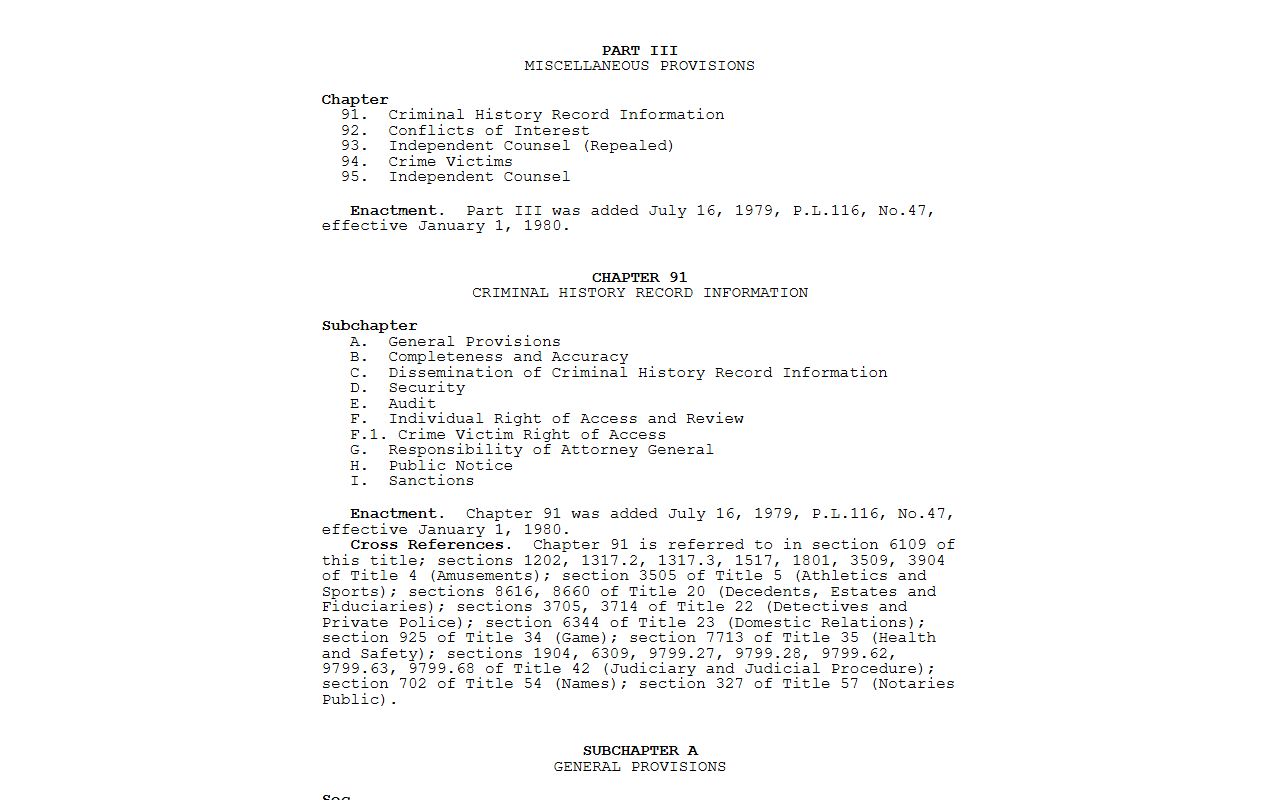
That chapter is the basis for how an arrest or charge moves onto, or off of, a state criminal history report.
A statewide check covers more than one county. Someone arrested in Delaware County may also have records from a neighboring county or from a federal case. A formal Pennsylvania State Police report pulls the state picture together, while the county docket gives the local detail. For federal matters, the public records page points to the federal court systems that cover the region.
Does an arrest show up on a background check? It can. An arrest may appear on a Pennsylvania criminal history report even with no conviction, unless the record was expunged or sealed under Clean Slate. Employers and licensing bodies have limits on how they may use non-conviction data, so the disposition still matters. Check the docket, then consider whether the record qualifies for expungement or limited access.
Sealed Versus Expunged Delaware County Records
Pennsylvania offers two paths to limit access to an old record, and they are not the same. Expungement removes eligible records from ordinary public access under a court order. Limited access, often called Clean Slate, seals certain records so the general public cannot see them, while courts and police still can. Eligibility turns on the offense, the outcome, the waiting period, and later criminal history.
| Point | Sealed (Limited Access) | Expunged |
|---|---|---|
| Effect | Hidden from the general public | Removed from ordinary public access |
| Who can still see it | Courts, police, and authorized agencies | Access is restricted by the court order |
| Common path | Clean Slate for eligible records | Petition for eligible non-convictions and more |
The adult expungement statute sets the process and eligibility in state law.
See 18 Pa.C.S. § 9122 for adult expungement of criminal history record information.
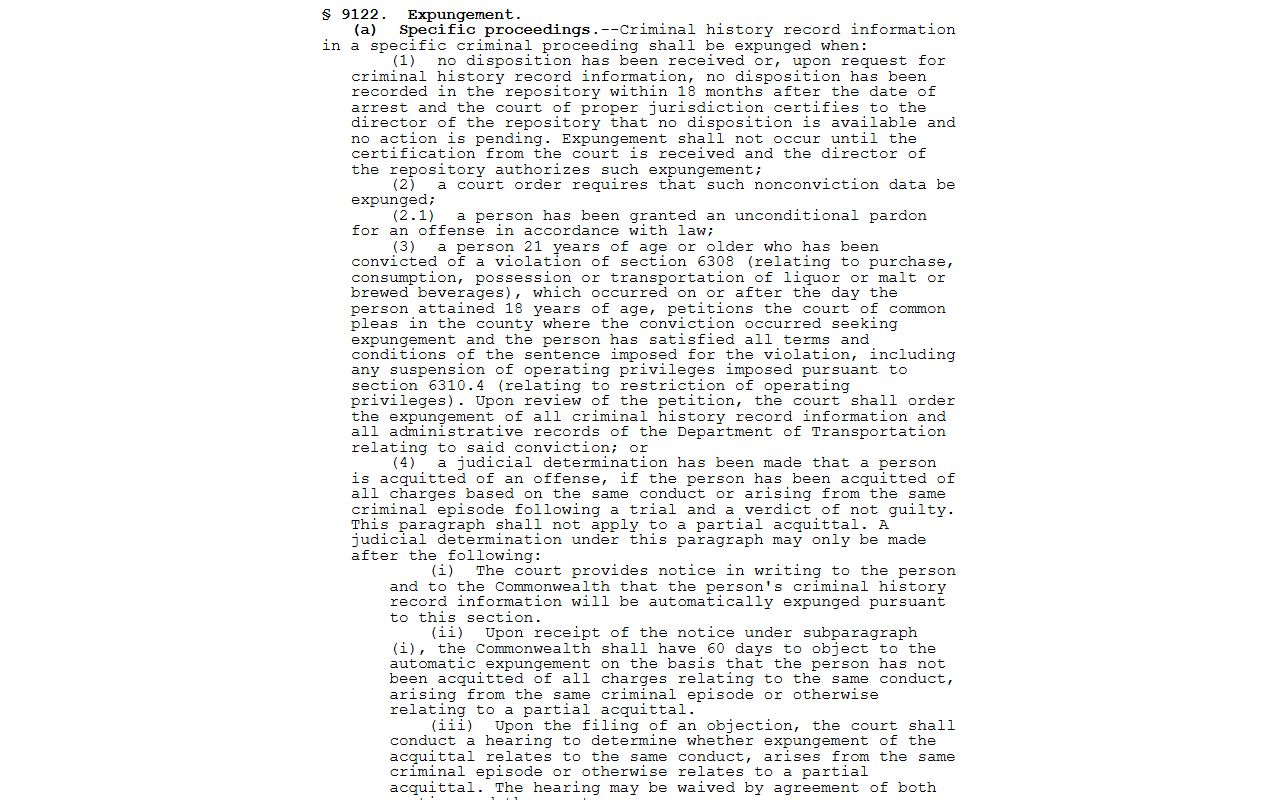
Because eligibility is technical, many people use the docket numbers and seek legal help before they file.
Delaware County District Attorney and Public Defender
Two offices shape a criminal case after arrest. The District Attorney prosecutes crimes in the Court of Common Pleas. The Public Defender represents people who cannot afford a private lawyer. Both are key contacts for anyone tracking or facing a Delaware County criminal case.
The county District Attorney is Tanner Rouse, whose office handles prosecution, victim support, and appeals.
The Delaware County District Attorney office prosecutes criminal cases countywide.
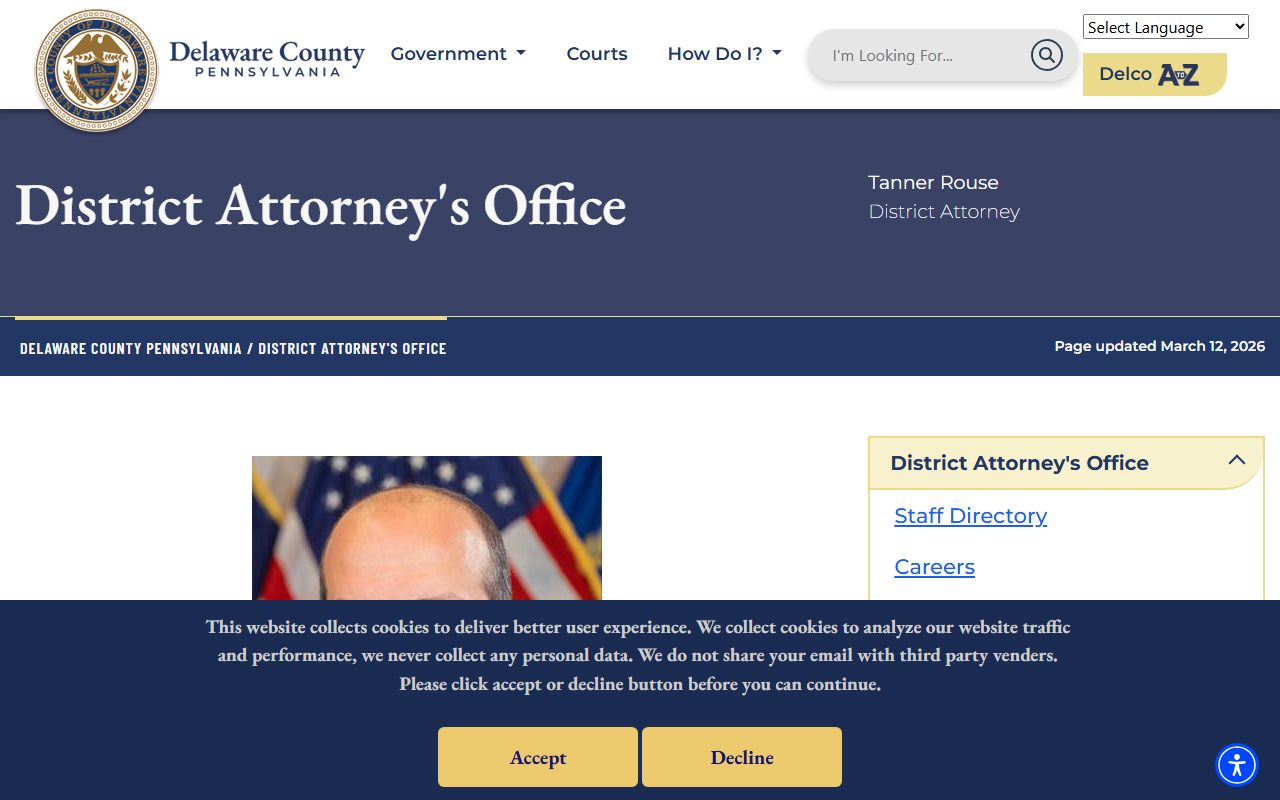
The District Attorney's mission statement stresses fairness, transparency, and support for victims.
Defendants who qualify can ask for appointed counsel. The Delaware County Public Defender represents eligible adults and youth.
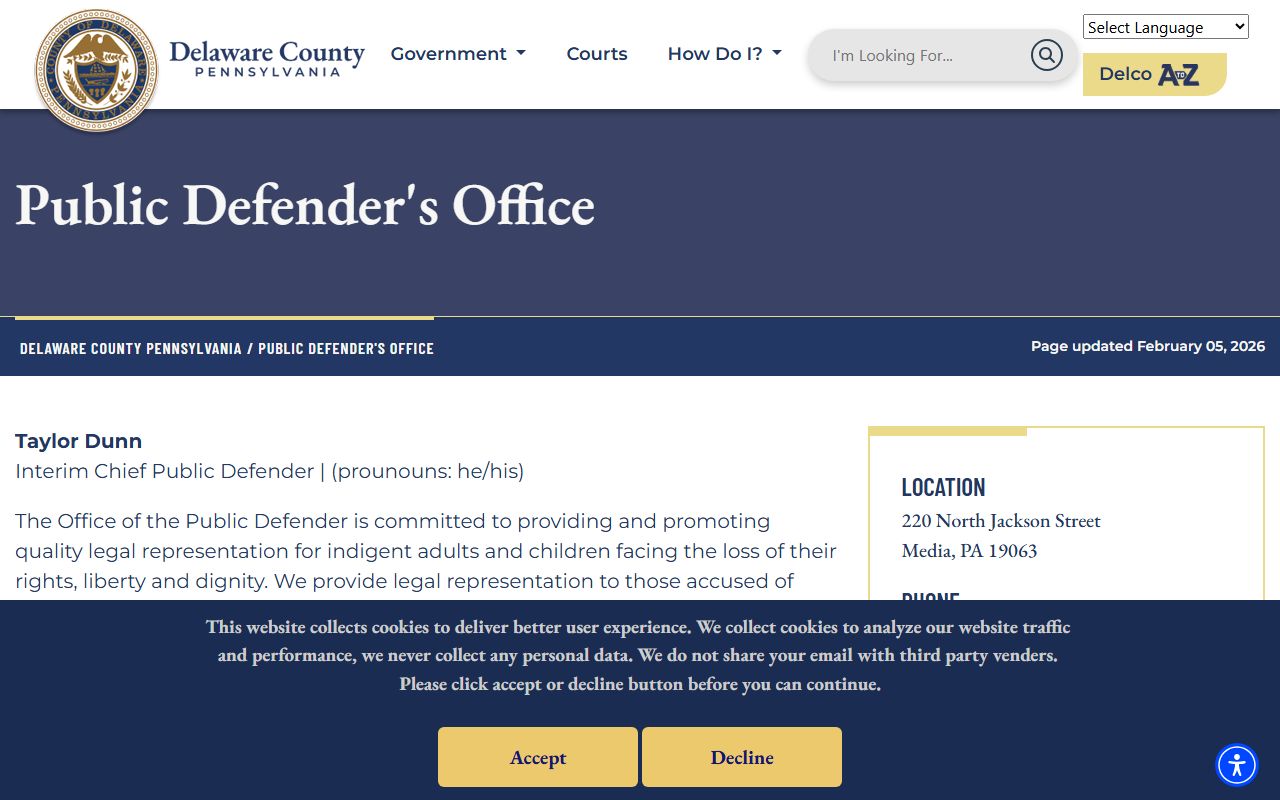
To apply for a public defender, the office lists a phone line at 610-891-4100. The office represents people in magisterial district courts, the Court of Common Pleas, and Pennsylvania appellate courts, and it also handles youth cases in juvenile court.