
How to File a Delaware County Public Records Request
A Right-to-Know request goes to the agency that holds the record. You describe the records you want, choose a format, and submit it to the agency's open-records officer. The Pennsylvania Office of Open Records publishes a standard request form and reviews many denials on appeal. The steps below outline the process.
Be specific about the records you seek. A clear request is faster to answer and harder to deny.
- Identify the county agency that holds the record.
- Write a clear description of the records you want.
- Submit the request to the agency's open-records officer, using the standard form if you like.
- Wait for the agency's response within the statutory time.
- Appeal a denial to the Office of Open Records, unless another appeals officer has jurisdiction.
The state agency that oversees this process explains it on one page.
The Pennsylvania Office of Open Records explains the Right-to-Know Law and the appeal process.
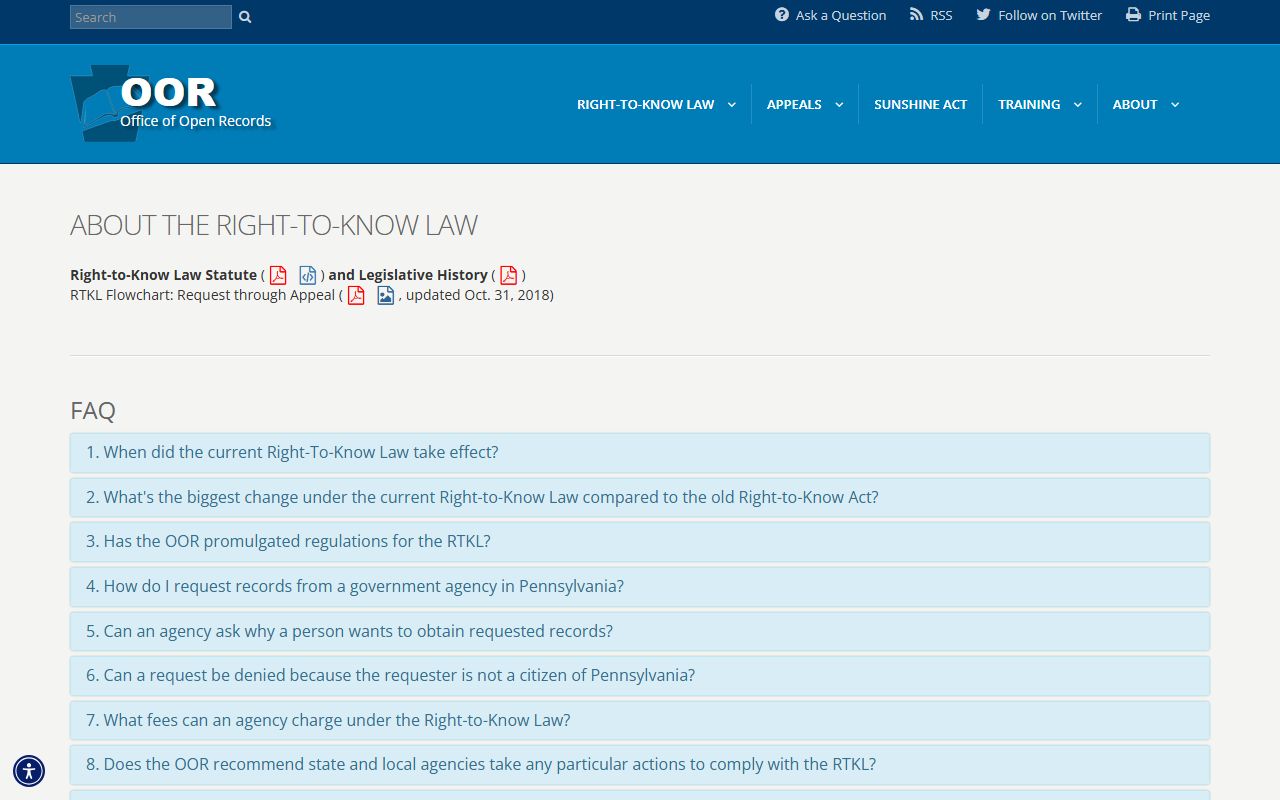
That office is the place to start when you are not sure how the law applies to a record.
You do not have to explain why you want the records. The Right-to-Know Law presumes access, so the burden is on the agency to show an exemption, not on you to justify the request. That said, a narrow, specific request is answered faster than a broad one, so name the records as precisely as you can.
Open Records Versus Court Records in Delaware County
This is the key split. The Right-to-Know Law covers records of county and local agencies. Court case records follow the judiciary's own access policy, not the agency process. So a request for a county contract and a request for a sealed criminal exhibit travel different routes and reach different decision-makers.
| Point | Agency Records (RTKL) | Court Case Records |
|---|---|---|
| What it covers | Budgets, contracts, agency files | Civil and criminal case files |
| Governing rule | Right-to-Know Law | Judiciary public access policy |
| Where to send it | Agency open-records officer | The clerk or court of record |
| Appeal route | Office of Open Records | Judiciary policy and court process |
For court case files, the court records page covers the search portals and the clerk's role.
The reason for the split is structural. Courts are a separate branch of government, so they set their own access rules rather than fall under the executive open-records law. That is why you cannot use a Right-to-Know request to pry open a sealed court file. The court's policy controls case records, and the Right-to-Know Law controls agency records. Send each request to the track that fits the record.
What Delaware County Agency Records Cover
County government generates many records beyond court files. The Right-to-Know Law reaches a wide range of them. The list below shows the kinds of records people often request from county and local agencies.
- County budgets, spending, and contracts.
- Agency policies, meeting minutes, and reports.
- Salary and personnel data that is not exempt.
- Inspection, permit, and licensing records held by agencies.
- Correspondence and other records that are not exempt.
Some records the public wants, like deeds and property records, sit with other county offices. The open-records officer can point you to the right one.
Vital records are a special case. Birth and death certificates in Pennsylvania come from the state, not a county Right-to-Know request. Marriage records, by contrast, come from the county Register of Wills. So a request for a birth or death certificate goes to the state, while a marriage record request goes to the county office covered on the marriage and divorce records page.
Delaware County Public Records Request Form Fields
The standard Right-to-Know request form asks for a few basics. You do not need a lawyer to fill it out. The fields below appear on a typical Pennsylvania open-records request.
| Field Label | Type | Required | Notes / Format |
|---|---|---|---|
| Requester name | Text | Yes | The person asking for the records. |
| Mailing or email address | Text | Yes | Where the agency sends its response. |
| Records requested | Text | Yes | A clear description of the records sought. |
| Format | Choice | No | Copies or inspection in person. |
| Agency | Text | Yes | The county or local agency that holds the record. |
| Date | Date | Yes | The date of the request. |
Keep a copy of your request and the date you sent it, since the response clock runs from then.
Fees for Delaware County Public Records
Agencies may charge for copies and certain costs, but the fees are limited. Under the Right-to-Know Law, charges are tied to the Office of Open Records fee schedule and to actual duplication, postage, and certification costs. Court copy fees are set separately by the court or local fee schedule. The table below shows where each fee comes from.
| Cost | Where the Fee Is Set |
|---|---|
| Right-to-Know copies | Office of Open Records duplication rates |
| Postage and certification | Actual cost charged by the agency |
| Court record copies | Court or local fee schedule |
An agency may ask for prepayment when the estimated cost is high, so ask about cost before a large request.
Response Timelines and Appeals in Delaware County
The law sets a clock. An agency must respond within the statutory period, and it may grant, deny, or invoke an extension for certain reasons. A denial must state a basis. If you disagree, you can appeal.
Most Right-to-Know denials go to the Office of Open Records, except where another appeals officer has jurisdiction. Judiciary record disputes follow the court's own policy and process instead. Keep your paperwork, because deadlines on an appeal are tight.
An agency does not have to create a record that does not exist, and it can deny exempt material. But it cannot simply ignore a request. A proper denial names the exemption it relies on, which gives you something concrete to challenge on appeal. If the agency misses the deadline entirely, the law often treats that as a denial you can appeal.
Note: Track the date you filed, since the agency's response time and your appeal window both run from set points under the Right-to-Know Law.
Confidential and Restricted Delaware County Records
Not everything is open, on either track. The Right-to-Know Law has exemptions, and court records carry their own confidentiality rules. Juvenile records, adoption records, and expunged or sealed criminal records are not ordinary public records. Personal identifiers like Social Security numbers are redacted.
Juvenile record expungement is one example set in state law.
See 18 Pa.C.S. § 9123, which allows expungement of eligible juvenile records.
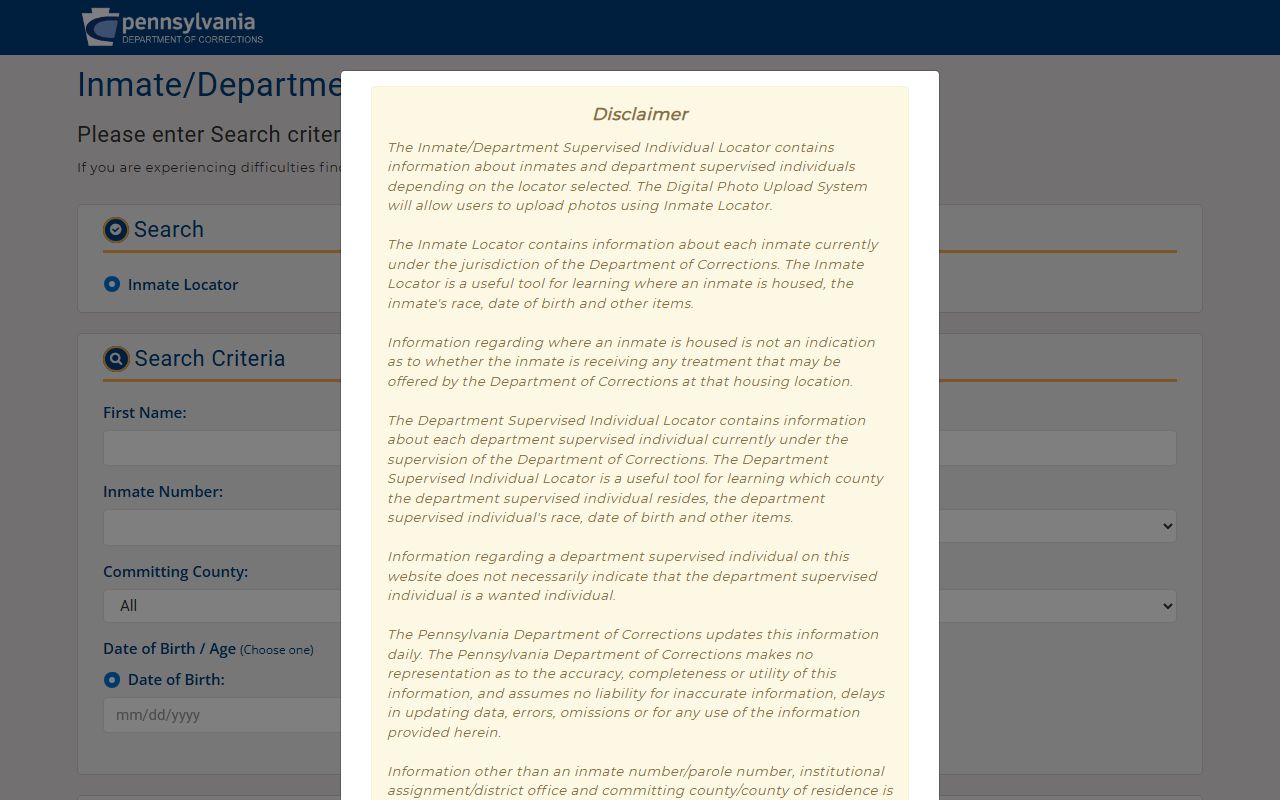
When a record is exempt or sealed, the agency or court must say so rather than simply ignore the request. A clear denial names the exemption, which gives you a basis to appeal. So even a "no" should leave you with a next step, not a dead end.
Federal Court Records From Delaware County
Some cases are federal, not county. Delaware County sits in the U.S. District Court for the Eastern District of Pennsylvania. Federal civil and criminal dockets are not in the county or state systems. They are searched through PACER, the federal court records service.
The federal trial court for this region has its own site.
The U.S. District Court for the Eastern District of Pennsylvania handles federal cases from the county.
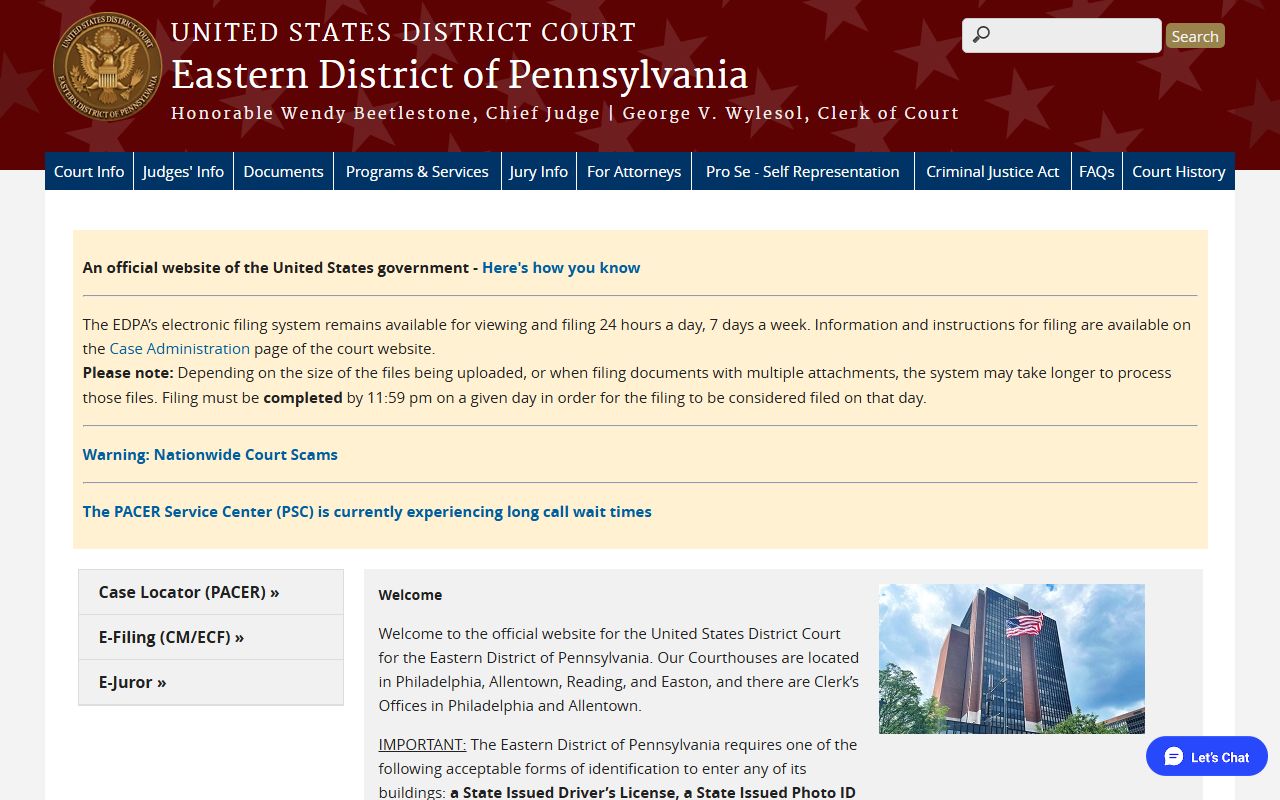
Register at PACER to search federal dockets, where document downloads may carry a fee.
PACER lets you search by party name, case number, court, and filing date. Viewing a docket is cheap or free up to a quarterly threshold, while document downloads add up. Federal bankruptcy and appellate matters have their own courts and sites, so a federal search may touch more than one system. The released inmates page covers federal custody, which is separate again.