
How to Search Delaware County Probate Records
Probate records live with the Register of Wills and Orphans' Court, not with the general court clerk. To search, start with the decedent's name and, if you have it, the estate file number. Many estate filings are open to the public once they are made, so a name search is often enough to find an estate.
Gather what you know about the person who died and the estate before you start.
- Review the Register of Wills and Orphans' Court information page.
- Search by the decedent's name, or by estate file number if you have one.
- Confirm the date of death and the open date to match the right estate.
- Review the docket entries for the will, letters, and any accounting.
- Request certified copies from the Register of Wills if you need them.
For court case files outside probate, the court records page covers the trial court portals.
Orphans' Court and the Register of Wills in Delaware County
Pennsylvania splits this work in a way that confuses newcomers. The Register of Wills handles probate, which means proving a will and opening an estate. The same office is the Clerk of Orphans' Court, which is the court division for estates, guardianships, and related matters. Use the term Orphans' Court for Pennsylvania content, since "probate court" alone is the out-of-state label.
The contact below is the office to reach for estate, will, and marriage record questions.
Register of Wills / Clerk of Orphans' Court
Delaware County Courthouse
201 West Front Street
Media, PA 19063
610-565-6990
This office also issues marriage licenses, which the marriage and divorce records page covers in full.
This split is a Pennsylvania feature worth repeating. The general court records office, the Office of Judicial Support, handles civil and criminal Common Pleas cases. The Register of Wills handles estates and Orphans' Court matters. So a probate question goes to the Register of Wills, while a lawsuit or criminal case goes to the Office of Judicial Support. Sending a request to the wrong office is the most common delay people hit.
How to Open an Estate in Delaware County
Opening an estate is the formal start of probate. The Register of Wills reviews the will, if any, and decides who may serve as personal representative. The steps below outline the process from the first contact to letters being issued.
- Determine whether the person who died left a will.
- Contact the Register of Wills for appointment and instructions.
- Present the death certificate, the original will, and the required petition and oath.
- Establish who has priority to serve as executor or administrator.
- Pay the filing and probate fees.
- Receive letters testamentary or letters of administration if the office accepts the filing.
- Gather assets, give notices, pay debts and taxes, and file the inventory or accounting where required.
Simple estates may close in months. Estates with real estate, tax issues, missing heirs, a contested will, or litigation take longer.
Do not expect probate to be quick or to be skipped. Even a modest estate has steps that protect heirs and creditors. Pennsylvania also has inheritance tax filings tied to estates, which add time. The Register of Wills can explain whether a small-estate path fits a given case, but most estates follow the full process above.
What a Delaware County Probate Record Shows
A probate record pulls together the basic facts of an estate and the filings made in it. The fields below show what a Delaware County estate record typically includes, though restricted matters may be limited.
- Estate or decedent name and the file number.
- Date of death and the filing or open date.
- Personal representative name and the attorney of record.
- Whether a will was filed, and the type and date of letters issued.
- Docket entries, inventory, and accounting filings.
- Orphans' Court petitions and orders.
Adoption, minors, incapacity, and sealed matters are restricted, so not every Orphans' Court file is fully open.
Delaware County Wills, Letters, and Estate Administration
Two documents anchor most estates. The will states the decedent's wishes and names an executor. Letters, either testamentary or of administration, are the court's grant of authority to the personal representative. With letters in hand, that person can act for the estate, such as paying debts and distributing assets.
When there is no will, the estate is intestate, and Pennsylvania law decides who inherits and who may serve. The Register of Wills can explain the difference and the priority order. The probate framework sits in the state's Register of Wills chapter.
See 20 Pa.C.S. Chapter 71, which establishes Register of Wills functions and the probate context.
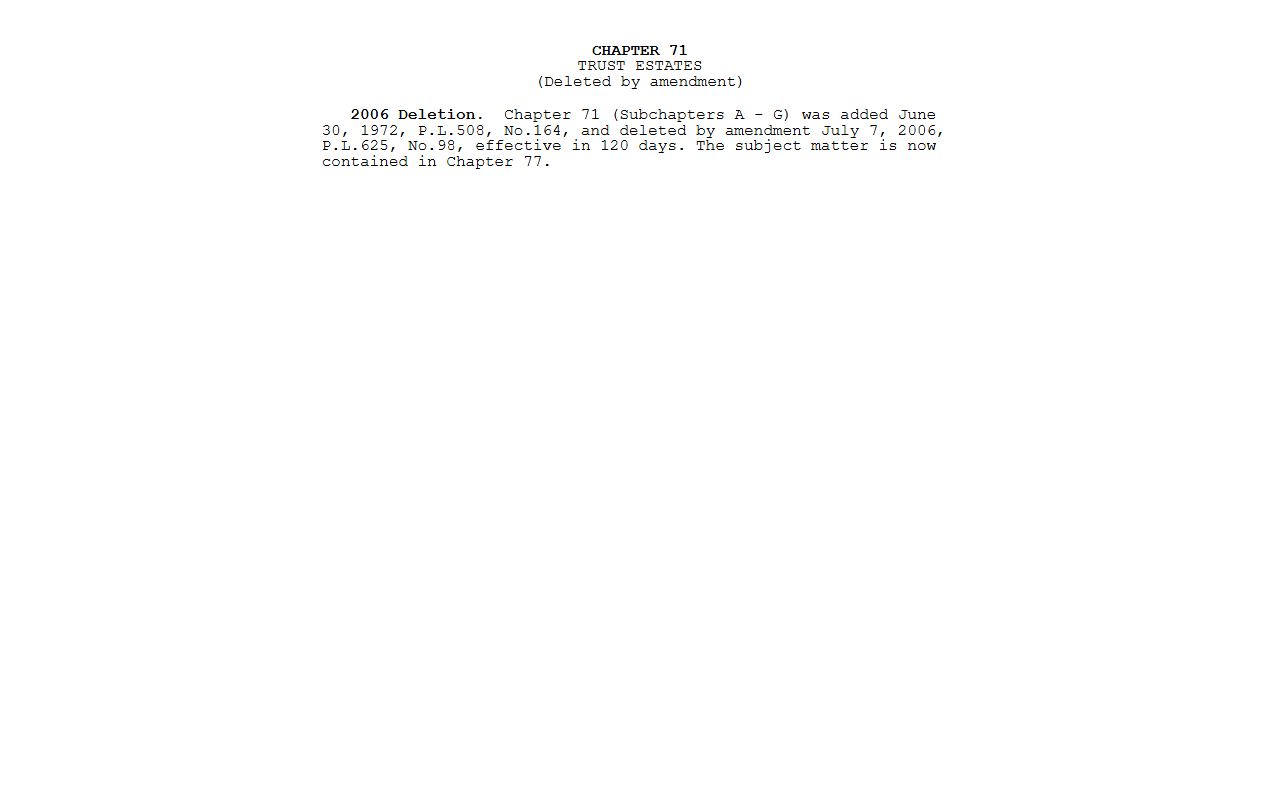
That chapter is the legal basis for how an estate is opened and administered in the county.
Letters come in two forms. Letters testamentary go to the executor named in a will. Letters of administration go to a person the court approves when there is no will or no named executor able to serve. Either way, a bank or agency will usually ask to see a short certificate before it releases assets to the personal representative.
Delaware County Probate Fees
Probate involves several fees, from opening an estate to certified copies. The exact amounts are set by the Register of Wills fee schedule and can change, so confirm them with the office before you file. The table below shows where each fee is set rather than a figure that may be out of date.
| Probate Item | Where the Fee Is Set |
|---|---|
| Estate opening / probate | Register of Wills fee schedule |
| Short certificate | Register of Wills fee schedule |
| Certified copy | Register of Wills fee schedule |
| Record search | Register of Wills fee schedule |
A short certificate proves a personal representative's authority, and banks and agencies often ask for one.
Guardianship and Restricted Delaware County Probate
Orphans' Court does more than estates. It also handles guardianship of an incapacitated adult or a minor, and certain adoption-related filings. These matters carry privacy protections, because they involve health, capacity, and children. Access can be limited to the parties, counsel, and people the court approves.
So a guardianship or minor's matter may not be open the way a routine estate is. When a record is restricted, the office can explain whether you may view it and what process applies.
Guardianship cases often run for years, since the court keeps watch over the protected person. Reports and accountings may be filed on a schedule. Because these files touch health and money, the court limits who can see them, and the level of access depends on the person's role in the case.
Note: Estate filings are often public after they are made, but guardianship, incapacity, and adoption matters carry confidentiality protections under Pennsylvania law.
Common Delaware County Probate Terms
Probate has its own vocabulary, and a few terms unlock most of it. The list below defines the words you will meet on an Orphans' Court docket or in an estate file.
- Testator
- The person who made the will.
- Executor
- The person named in a will to settle the estate.
- Intestate
- Dying without a valid will, so state law controls.
- Guardianship
- Court-ordered authority over a minor or an incapacitated person.
- Conservatorship
- Authority over the financial affairs of a protected person.
When a term on a filing is unclear, the Register of Wills can explain the procedure, though staff cannot give legal advice. Knowing the right word also helps you ask for the exact document you need, such as a short certificate or a copy of the will. That makes a request faster to fill and easier to get right the first time.