
How to Apply for a Delaware County Marriage License
A marriage license in Delaware County comes from the Register of Wills. The office takes the application, issues the license, and keeps the marriage record. Pennsylvania sets a short waiting period and an expiration window, so plan the timing around the ceremony date. Confirm the current appointment, online application, ID, and fee rules on the official page before you go.
Both applicants are part of the process. Bring identification and any documents about a prior marriage.
- Review the Register of Wills marriage license page.
- Complete the online or pre-application if the office offers one.
- Schedule or appear as the office requires.
- Bring identification and prior-marriage documents if you were married before.
- Pay the current fee.
- Observe Pennsylvania's waiting period and expiration rules.
- After the ceremony, the officiant returns the license for recording.
The Register of Wills is the office for licenses, certified marriage records, and Orphans' Court filings.
The Delaware County Register of Wills handles marriage licenses, estates, wills, and Orphans' Court records.
Because the office also serves as Clerk of Orphans' Court, the probate records page covers its estate side.
Delaware County Marriage License Application Fields
The marriage license application asks both applicants for identity and contact details, plus information about any prior marriage. Having these ready speeds up the appointment. The table below lists the fields a Delaware County application typically collects.
| Field Label | Type | Required | Notes / Format |
|---|---|---|---|
| Applicant 1 legal name | Text | Yes | Name as shown on identification. |
| Applicant 2 legal name | Text | Yes | Name as shown on identification. |
| Address | Text | Yes | Current residence. |
| Date of birth | Date | Yes | Used for age eligibility. |
| Government ID | Presented ID | Yes | Verify the acceptable ID list with the office. |
| Prior marriage information | Text or date | Conditional | Divorce or death date and documents if married before. |
| Contact information | Phone or email | Yes | For application follow-up. |
The license must be returned and recorded after the ceremony, so the officiant details matter near the end of the process.
Delaware County Marriage Records and Certified Copies
Once a marriage is recorded, the Register of Wills holds the official record. A certified copy is the version other agencies accept for a name change, benefits, or legal matters. An uncertified copy is for reference only. Request certified copies from the Register of Wills, and confirm the current fee and any ID rules at the time.
A certified marriage record is different from the license itself. The license authorizes the marriage; the recorded record proves it happened. For a record from many years ago, the office can explain how older records are stored and retrieved.
Couples sometimes need the record for a name change, a passport, immigration, or a benefits claim. In those cases, ask for a certified copy, not a plain printout, because agencies reject uncertified versions. The Register of Wills can tell you how many copies you may want, since each agency that wants proof usually keeps its own.
Delaware County Marriage Record Fees
Marriage license and copy fees are set by the Register of Wills, and they can change. Rather than list a dollar figure that may be out of date, confirm the current amount with the office before you pay. The table below shows where each fee is set.
| Service | Where the Fee Is Set |
|---|---|
| Marriage license | Register of Wills fee schedule |
| Certified marriage record | Register of Wills fee schedule |
| Record search | Register of Wills fee schedule |
Bring a payment method the office accepts, and ask about cash, card, and check rules before your visit.
How to Find Delaware County Divorce Records
Divorce is not handled by the Register of Wills. A divorce is a Common Pleas family case, filed through the Office of Judicial Support and the family court. To find a divorce record, search the county and statewide court portals, or contact the Office of Judicial Support for a certified record.
Start with the court records search rather than the vital-records office.
- Search Delaware County Public Access or the statewide UJS portal.
- Use a party name or the family case docket number.
- Open the docket to confirm the case and its status.
- Contact the Office of Judicial Support for a certified divorce record.
The court records page covers the search portals and case-number formats in full.
A divorce docket shows the case exists and where it stands. It will not always show the financial or custody detail inside the file, since much of that is protected. If you need a certified decree, the Office of Judicial Support is the office that issues it, and a docket number makes the request faster.
Pennsylvania Divorce Filing Basics
Pennsylvania law sets the frame for divorce, and Delaware County follows it. A residency requirement applies before filing. The law allows both no-fault and fault grounds. The divorce itself is filed in the Court of Common Pleas, while property division, alimony, custody, and support may move on separate filings and orders.
Cost can be a barrier, so the courts allow fee waivers in some cases. A petition to proceed in forma pauperis lets an eligible low-income litigant ask the court to waive filing fees. The PA LawHelp portal points to self-help forms and civil legal aid for family cases.
Restricted Delaware County Family and Divorce Documents
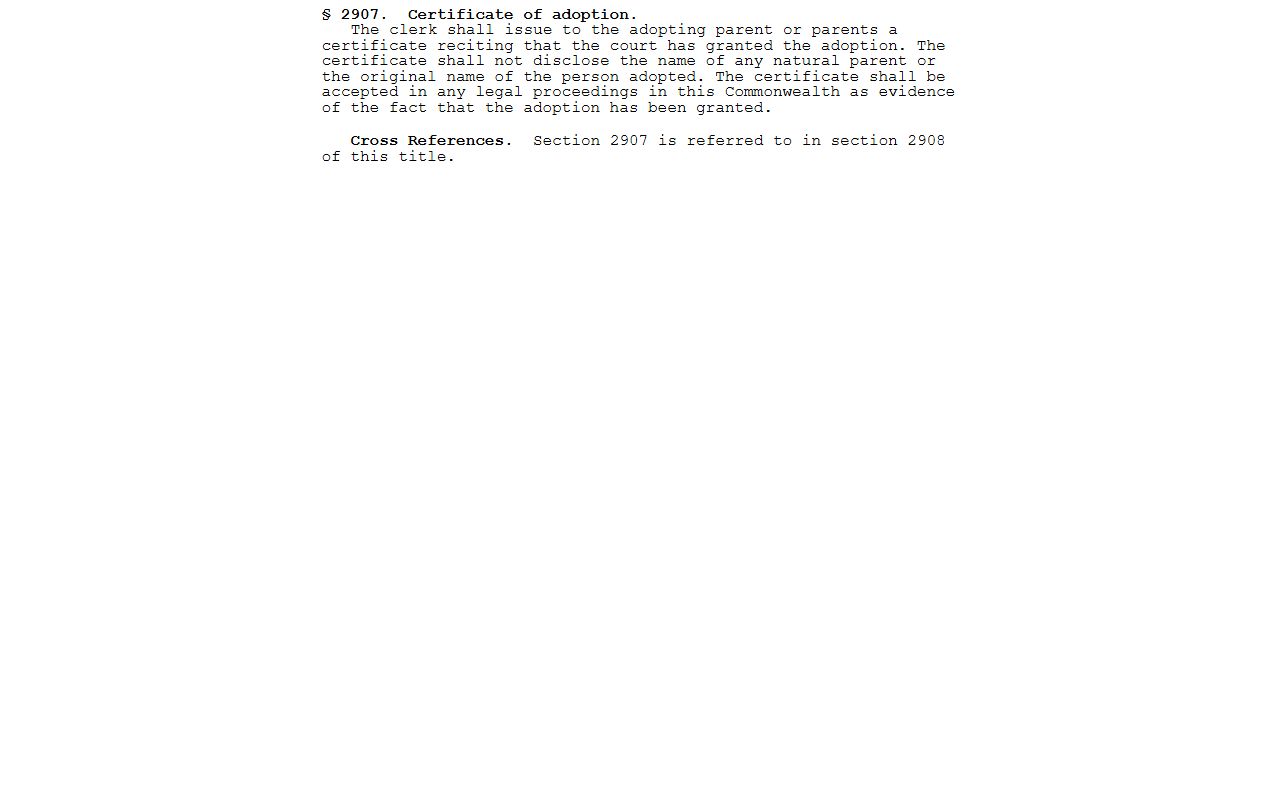
A divorce docket may be public, but many of its documents are not. Financial disclosures, custody details, and abuse-related filings can be sealed or redacted to protect the people involved. Adoption records are confidential under Pennsylvania law and open only by statute or court order.
Adoption confidentiality is set in the state's adoption statute.
See 23 Pa.C.S. § 2907 for the confidentiality of adoption records.
So a missing document in a family case is often a sign of redaction, not a search error.
Common Delaware County Divorce and Family Terms
Family court uses a handful of terms that shape a divorce case. Knowing them helps you read a docket and talk with the court. The list below defines the ones that come up most often in Delaware County family filings.
- No-fault divorce
- A divorce granted without blaming either spouse, based on consent or separation.
- Fault grounds
- Specific legal reasons, set by statute, that one spouse may use to seek a divorce.
- Alimony
- Support one spouse may be ordered to pay the other after divorce.
- Custody
- The legal and physical care arrangement for a child.
- In forma pauperis
- A petition asking the court to waive filing fees for an eligible low-income litigant.
Property division and support are decided on their own filings, even though they grow out of the same divorce.
Self-Help and Family Court Resources
Self-represented litigants handle many family matters in Delaware County. The most common needs are a divorce complaint, a custody petition, a support filing, and a protection from abuse petition. Court staff can give procedural information but cannot give legal advice.
For protection from abuse, the Delaware County PFA page explains the process. For broader help, the public records page and the Office of Judicial Support point to the right court office for each filing.
Filing in the right place matters. A divorce, custody, or support matter belongs in the Court of Common Pleas family system, not at the Register of Wills. A protection from abuse petition has its own intake. When you are unsure which office handles a filing, the county court pages and court staff can point you to the correct counter before you submit anything. A quick call ahead can also tell you which documents to bring, since a missing form can mean a second trip. That small step saves time on filing day.